
Commercial Roof Construction: Flat Roof Materials Guide
From material selection to installation methods, the commercial roof construction process is definitely complex. After all, you also have to deal with weather exposure, drainage issues, and structural concerns that force you to trace back your steps or extend the work timelines.
So how can you be better prepared for this project? This guide explores types of commercial roofs, materials for commercial flat roof projects, and roofing safety standards to help you make educated choices that maximize your investment. Let's take a look!
Understanding Commercial Roof Types
First things first, you need to narrow down the options for your clients. Commercial roof types include:
- Built-up Roofing (BUR)
- Modified Bitumen
- Single-Ply Membranes (TPO, EPDM, PVC)
- Spray Polyurethane Foam (SPF)
Before you choose, consider climate, building use, budget, and energy efficiency goals. Understanding these options can significantly impact your building's longevity and performance.
Commercial Flat Roof Materials
Traditional commercial flat roof materials include asphalt, gravel, and coal tar pitch. On the other hand, modern materials incorporate synthetic rubber compounds, thermoplastic membranes, and reflective coatings.
Other innovative options, like the cold roof system, offer benefits for specific applications. Choosing the right materials for commercial buildings in extreme climates is crucial for energy efficiency, so make sure you suggest the best alternatives.
Commercial Flat Roof Installation
Commercial flat roof installation requires proper preparation, Make sure you don't miss:
- Structural assessment
- Drainage planning
- Material selection
- Compliance with roofing safety standards
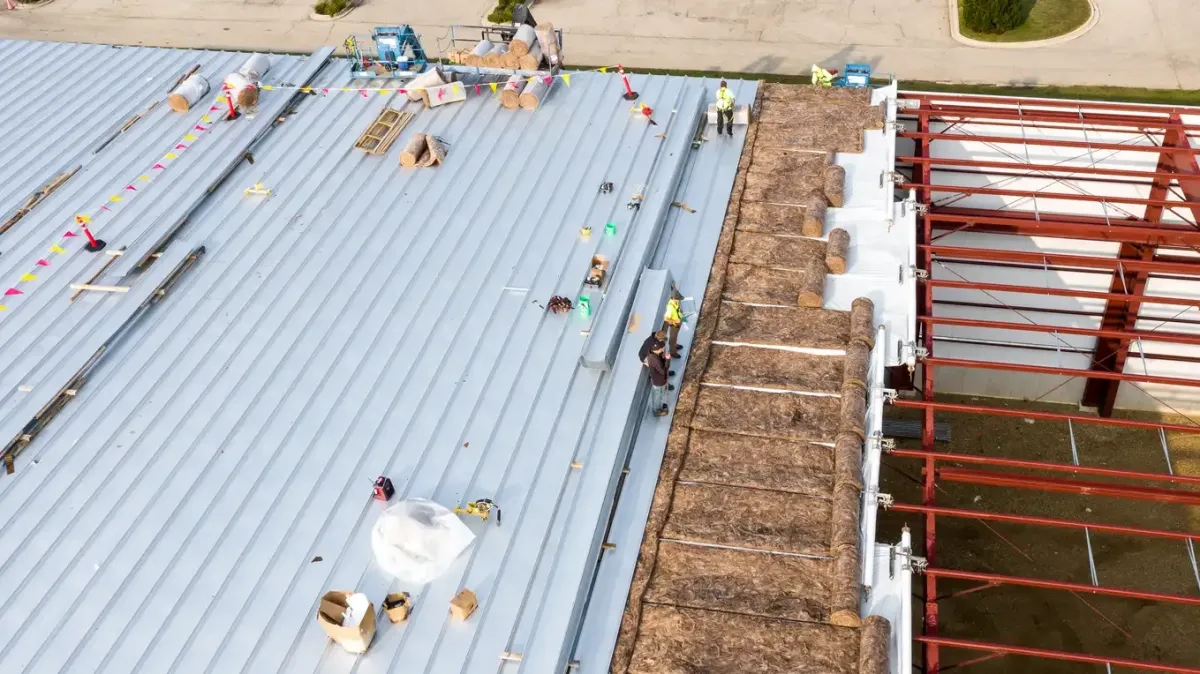
Proper commercial flat roof installation techniques will ensure your roof performs optimally throughout its expected lifespan. That's why you should remember these steps:
- Deck preparation
- Insulation installation
- Membrane application
- Flashing and detail work
- Final inspection
Maintenance and Replacement
Educate your clients on the signs that commercial flat roof replacement may be necessary. Tell them about persistent leaks, membrane damage, and ponding water, and why they shouldn't ignore them. You could also offer regular inspections, which can help identify issues before they escalate. Remember, your job doesn't end at the commercial roof construction.
Discover Insights to Improve Your Construction Process
The commercial flat roof industry continues to evolve with new materials and techniques. That's why staying informed about types of commercial roofs can make all the difference for roofing professionals. With the right tools and knowledge, you can deliver superior results that stand the test of time.
And what better place to lead than RoofCON? We support the industry through our annual roofing convention, providing insights on everything from installation methods to average roof salesman commission structures, helping professionals elevate their businesses. Save your seat for our next event!